

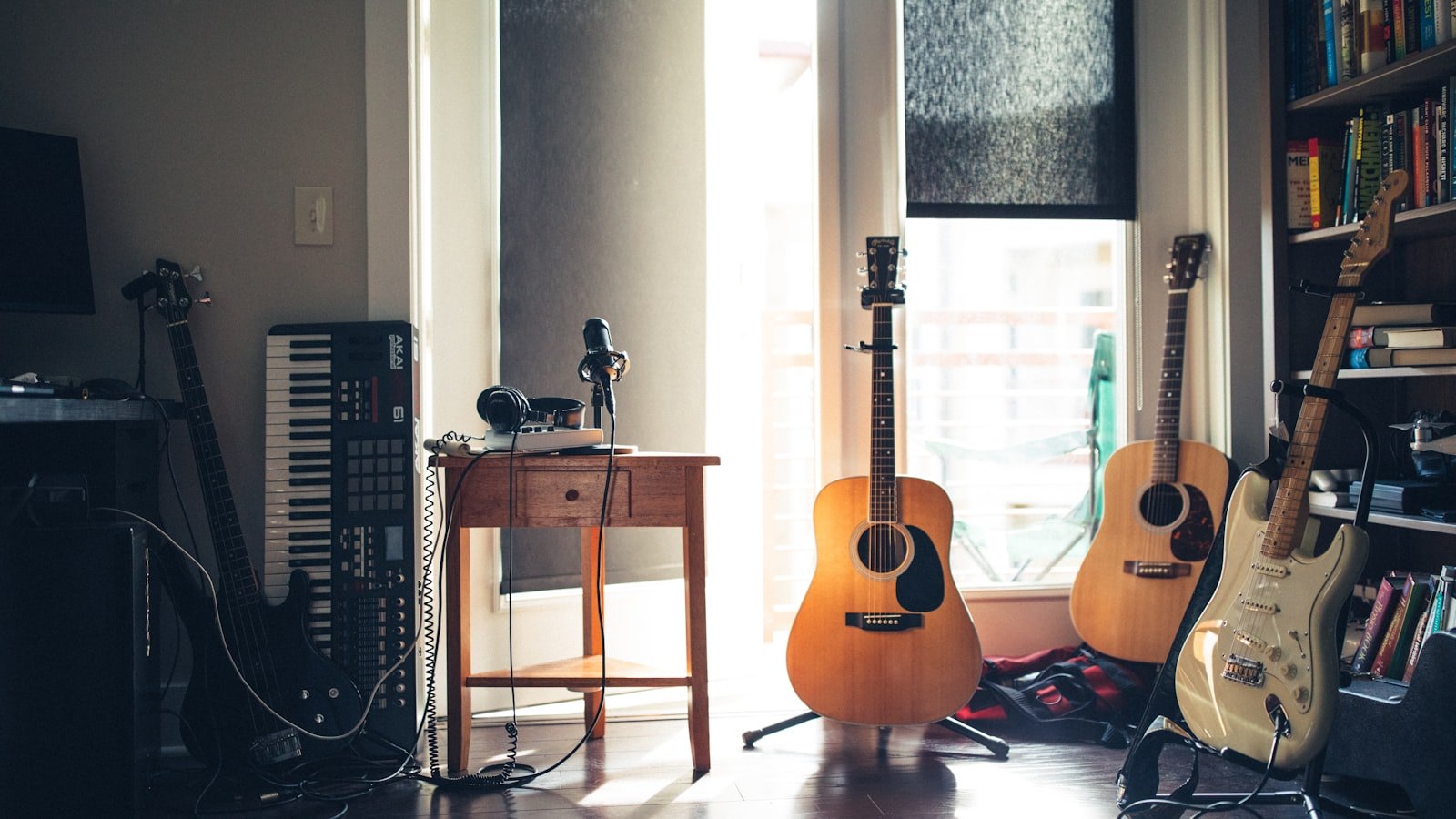
Billboard's Makin' Tracks column looks at the writing and recording process behind Kelsey Hart's "Love to Be That Guy.
Everybody’s selling. The car dealer, the grocer, the cable company, the radio station and the record company’s radio promotion team are all hawking a product — be it a physical item or an inanimate construct such as air time or access.
Curb recording artist Kelsey Hart discovered two years ago that songwriters make sales, too. Taylor Phillips (“Been by Now,” “Woman”) called him about “Love to Be That Guy,” a song he and three co-writers had just finished.
He wanted Hart to be the guy to sing it, but it was a hit song and they weren’t going to wait. Hart needed to come out to the home of Ashley Gorley (“I Had Some Help,” “World on Fire”) before the night was over and record his voice on the demo.
Otherwise, they would pitch it to someone else. Related It's a 'Polaroid' Moment for Eladio Carrión With Second Latin Airplay No. 1 NAACP Image Awards Adds 10 New African Categories for 2027 Josh Groban's Find Your Light Benefit Concert Will Honor This Famed Trumpeter & Include a Performance by a Boy Bander.
Hart was obviously sold. “I listened to it a couple times,” he remembers, “and then went out there and re-sang it.”.
It was an unplanned trip — roughly 40 miles each way, plus the time it would take to record the part. Hart showed some strong commitment to a song he’d just heard.
But Phillips demonstrated his own belief in the song by applying conditions to the transaction. “It was a classic sales pitch,” says co-writer Brad Clawson (“Up Down,” “Wannabe”).
As Brown built the track, one of them found the “Love to Be That Guy” title in a list on their phone, and the two pieces seemed to fit. Around that point, Gorley stuck his head in the room, just to see if they had anything going.
The title had anthemic possibilities, so they used it to start a chorus, the male protagonist giving his best sales pitch as a permanent partner. As it wound to an obvious conclusion, where they almost repeated the full title again, a new section bubbled up with different, quicker phrasing before the chorus finally reached the conclusion it had teased before.
That chorus’ pledge was a pitch for a potential new relationship, though it didn’t have a setting. People can meet in all sorts of places — picnics, church, dances — and the chorus left the options open.
But as they dug into the first verse, they set it… in a bar. “Yeah, we did,” Clawson allows. “Sometimes it just feels right.”.
The entire first verse has the guy checking all the signs to make sure she’s alone: no ring on her finger, only one glass at the table. Then he takes his chance.
Phillips started thinking about Hart as the guy to sing it. The two had talked ahead of the retreat about what Hart needed, and “Love to Be That Guy” was tilting in that direction.
Before the writers finished, their lyric clarified that the singer was “way out of his league,” but still making a play: “Throwing them long-shot lines at a small-town dime.” The long-shot lines were his sales pitch while the “dime” is a slang reference based on a one-to-10 scale.
Brown finished the demo that day, and Gorley sang the initial lead vocal as a placeholder. When Phillips sent it to Hart, the singer recognized that it was practically made to order.
Once Hart threw his vocal on the demo, the Curb team got amped about the song, too. Hart recorded it Sept. 17, 2024, at the Curb Studio on Music Row with producer Blake Bollinger (Rodney Atkins, LOCASH).
They used Brown’s demo as a template, but made a few changes to fill it out and amp it up with acoustic guitarist Tim Galloway as the session leader.
Galloway provided a clanging, almost-metallic rhythm underneath, while electric guitarist Justin Ostrander layered in two, interconnected rhythm parts and turned in a solo with a dazzling waterfall melody at its finale.
Steel guitarist Justin Schipper altered the demo’s signature lick with an almost-spooky tone, while eight voices layered in unison on top of it to create greater depth.
And Bollinger encouraged bassist Jimmie Lee Sloas to take a prominent role.
After the session, Bollinger overdubbed some block piano chords that lent extra weight to the overall sound, and tossed on some additional percussion, including beatbox riffs in the second verse that, he says, “you can’t really hear, but you can kind of feel.”.
Hart handled the lead vocal plus the high and low harmonies a few weeks later. In January, Hart played it for radio programmers at an event in Park City, Utah, and got a positive response.
Curb released it to radio via PlayMPE on Aug. 7. Now, his team is poised to close on the sale.
Your email address will not be published. Required fields are marked *.
Billboard is a part of PMX Global, LLC, a subsidiary of Penske Media Corporation. © 2026 Billboard Media, LLC. All rights reserved.


Comentários
Participe da conversa. Comentários passam por moderação antes de aparecer.
Carregando comentários…