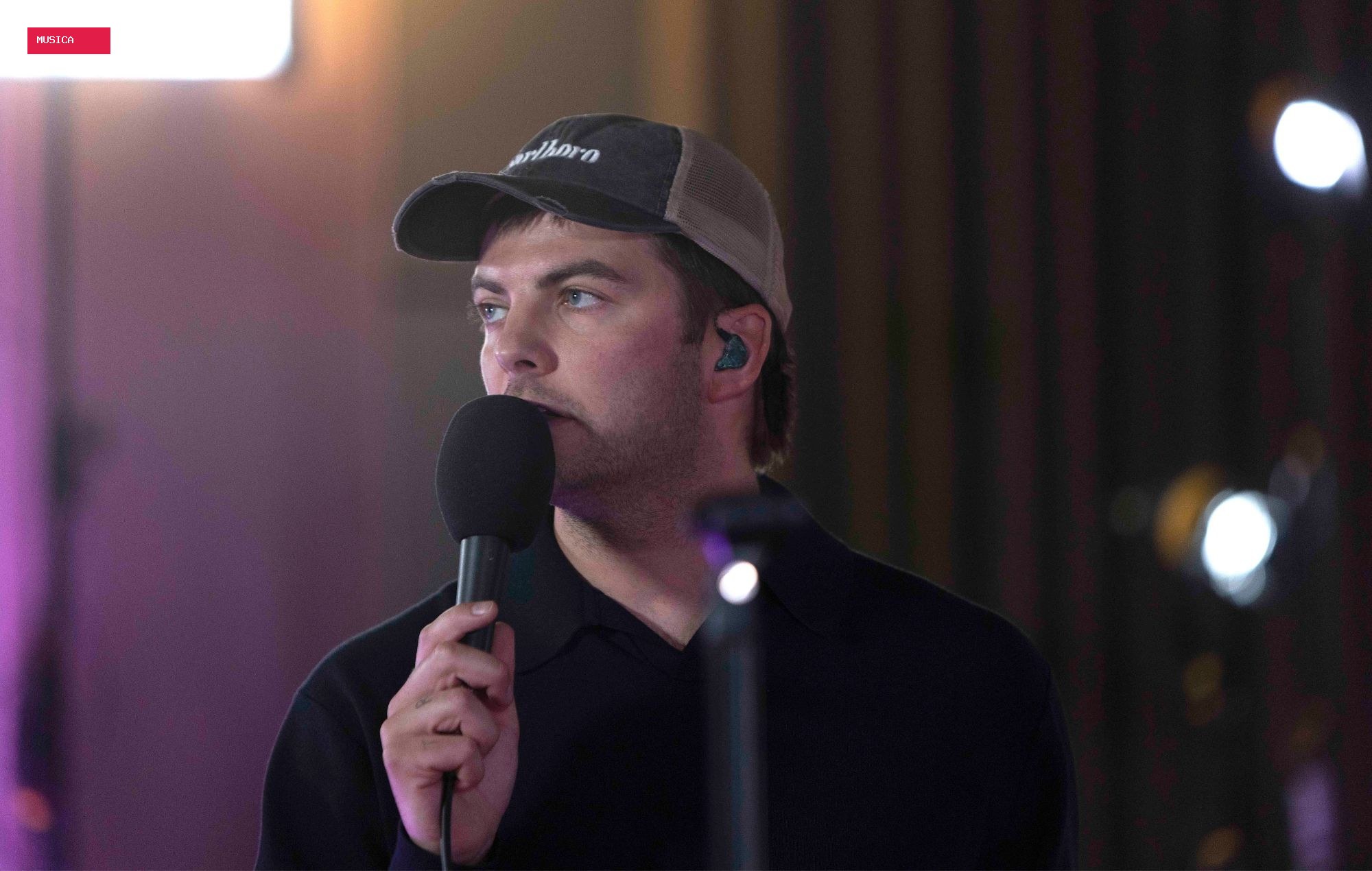
After vowing to never set foot on Ibiza until he played here, HUGEL is now at the helm of a busy residency at Hï Ibiza every Thursday night. His debut album ‘Twenty One’ includes collaborations with Snoop Dogg, David Guetta and French Montana.
He launched the release on the White Isle with an Ushuaïa-to-Hï Ibiza double header party. 21 years on from taking a DJ course in Cannes, DJ Mag Ibiza meets the man from Marseille to learn about the route that’s taken him to where he is today.
Florent Hugel decided from the get-go that his first visit to Ibiza should be as a performing artist. True to his word, the first time he ever set foot on the island was the first night he played at Pacha almost 10 years ago.
He’s been back every summer since. Now he holds the Thursday night residency at Hï Ibiza, a club that has been voted into the No. 1 spot in DJ Mag's Top 100 Clubs poll multiple times in recent years.
When DJ Mag Ibiza meets the DJ and producer best known mononymously as HUGEL, he's sat poolside in his villa on a warm, sunny Tuesday afternoon. Over the course of our conversation, he sheds a light on his relationship with the island, as well as the rich cultural backdrop of his upbringing in Marseille, which has played a major role in his sound and his career over the years, not least on his recently released album, ‘Twenty One’.
The official launch party for the album doubled as one of his biggest Ibiza moments to date – a full day-to-night takeover, from Ushuaïa Ibiza in the afternoon straight through to Hï Ibiza in the evening.
David Guetta called me crazy,” he says of the double-header event. “He was like, ‘Bro, you need to sell out Ushuaïa and then Hï the same day. How do you expect to fill both places when people can decide between the two?’ I like a challenge.
I like it when someone says it’s risky, it’s crazy. I was like, ‘Forget it, let’s go!’”.
Both shows sold out. “People really loved it," he says. "I think a lot of my music works especially well in a daytime setting, so Ushuaïa fits super well.”.
On stage, he was joined by Malachiii — who appears on two tracks on ‘Twenty One’ — to perform live. Then, David Guetta joined him on stage during ‘Shine’, another album track.
It all demonstrates the level of creative freedom HUGEL's been enjoying in these clubs, particularly in Hï Ibiza. “It’s like the achievement of 20 years in the making,” he says of his residency.
When he started out, the DJs that HUGEL looked up to weren’t necessarily the superstar headliners — they were the residents, the ones holding down a night week after week, building something special with the crowd and forging a connection to the club and the dancefloor.
What makes Hï Ibiza that extra bit special? “It’s the access,” he says. “In life, we value opportunities that are difficult to access. Not every artist gets the opportunity to hold a major residency at this level in Ibiza, and that makes it especially meaningful.
Now, if you ask me why the club itself is special to me, it’s because I’m allowed to build my own production with my artistic director, and we build a full concept,” he continues.
Every Thursday, he plays for three hours, longer than many other headliners on the island will play these days. “I’m one of the few who play three hours every week at my residency,” he says.
The extended set times give him opportunities to invite collaborators along. Later this summer, he'll play back-to-back with MoBlack for the first time. “We’re very good friends, so I think he knows how it’s going to go.
The most important thing is to keep it fun and interesting and to make people happy, make people dance.”.
HUGEL was born in Marseille, a city he emphasises has a character that's all of its own, distinct from Paris or anywhere else in France. The Mediterranean port city has been shaped by North African, West African, Spanish, Italian, Corsican, Armenian and the many other communities whose histories and cultural influences have intertwined there across generations.
It’s where HUGEL grew up, and where his musical identity took root. “My family is of Spanish origin, from southern Spain, so I always had that Spanish influence,” he says.
Growing up, HUGEL did not connect with conventional academic education. At 16, the vocational path proposed to him did not match his interests or ambitions. Music was where his head was at.
The deal was simple. “My dad said, ‘If you bring back the diploma to your mum, I’ll pay the €350 for the DJ course.’ Believe me, the diploma was done fast,” he laughs.
After five days at a school in Cannes, he came back hooked. “I just started and got crazy with it, put all my money into buying vinyl. That’s how I got addicted.” From there, he was making regular runs to Barcelona, hunting down underground Latin house records and releases from the likes of Masters At Work.
His album ‘Twenty One’ takes its name from all those formative years. He describes it as a sonic self-portrait, encompassing the sounds he grew up with, the cultures that shaped him, and the people who inspired him.
We ask him what it would mean to the young Florent in that Cannes DJ school if he could hear the album, which features collaborations with the likes of French Montana, Snoop Dogg, Big Sean, Ultra Naté and David Guetta.
But you grow, you travel, you learn other languages, you end up moving to America, and suddenly, before you even realise it, you’re part of that world and they want to work with you.”.
That said, the hip-hop world never really left him. As house music became increasingly dominant in certain international club and festival spaces, he says some hip-hop artists became interested in reaching those dancefloors.
He developed and produced the majority of the album’s core musical ideas himself, on the road — in Australia, Miami, LA, Dubai and Bali. “My guy was saying just before you arrived, ‘I was listening to the album again this morning and I can picture all the places we’ve been,’” he says.
It is also, therefore, an Ibiza album. “When you listen to it, you can play it in your jeep and drive around, go from the beach to the hippie market, have a drink at Mambo for the sunset,” he says.
It’s a sound he’s been chasing since before he ever set foot here. “We used to produce music that we were calling Balearic house. I always wanted to do this. I remember driving to Barcelona to buy vinyl, looking for that vinyl, wanting that specific record.
We’d never been to Ibiza, but we asked ourselves, ‘What is Ibiza for us?’ So, we created a vision of it. And I think the Balearic world is really what I am.”.
HUGEL's music is most often described as a take on Latin house, though he's quick to emphasise that he's not an originator of this sound, the roots of which stretch deep into the history of New York’s Latin American club culture.
I helped bring renewed mainstream attention to a genre that I grew up with in the vinyl stores in Barcelona.”.
That’s where his label, Make The Girls Dance Records, came in. With multiple releases to its name, he now says it's the biggest move in his career. “Aside from all the hit records, the fact that I have a label with a sound imprint and a personal touch in the industry — my success got wider because of that.”.
The fruit of that success is clear in his life in Ibiza, where he's also found a sense of focus and balance that's seen him quit drinking and take to training most days.
When we ask about downtime after the season, he has a different vision. “When you love something, what would you recover from?” he says. “I need to create music all the time.
I need to DJ all the time. I need to travel all the time. That’s the life.”.
He describes that pace as an expression of his enthusiasm for the work, while acknowledging that maintaining it requires discipline. And for that life, Ibiza and Miami are the two places that make the most sense to him.
Miami, where he lives after the Ibiza season, gives him the same mix. “I can go to the beach in the morning and feel like I’m in the Bahamas. But then in the afternoon, I’m at the studio working like I’m in New York.
There aren’t many places like that anywhere.”.
Want more? Read DJ Mag Ibiza’s cover interview with FISHER here.
Mick Wilson is DJ Mag’s Tech and Ibiza Editor. Follow him on X @DJMagTech.
Fontes
Informação baseada em material público de DJ Mag, reescrito pela redação ULTRA NOTÍCIAS.