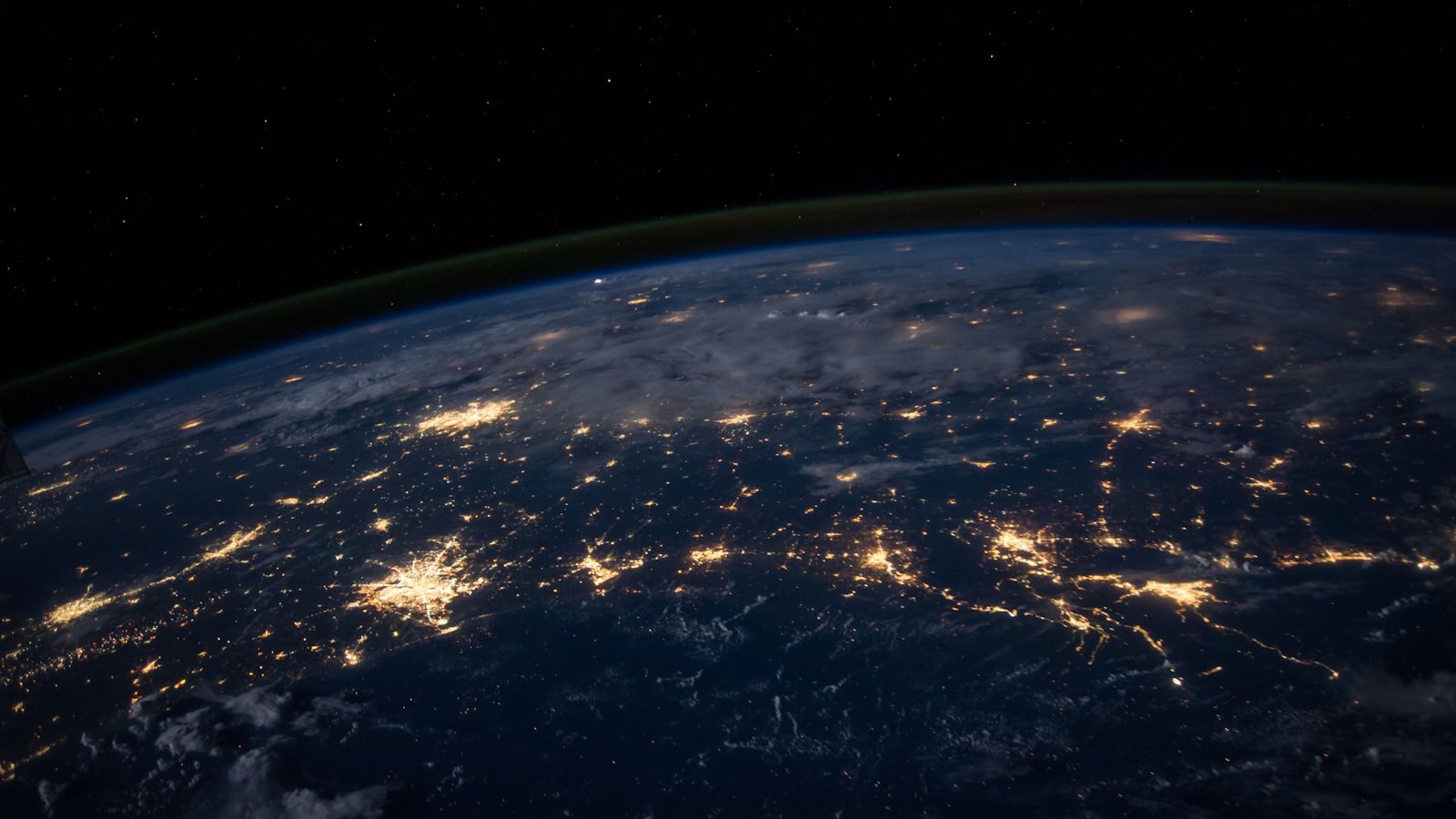

O poderoso telescópio de próxima geração da NASA decolou para o espaço a partir de sua plataforma de lançamento na Flórida, com a missão de explorar a energia escura, buracos negros e outros mistérios do Universo.
O que os cientistas podem aprender com um foguete da SpaceX que atingiu a Lua? Publicado em 5 de agosto.
Figure caption, Watch: Nasa launches Roman telescope from Kennedy Space Center.
O telescópio Nancy Grace Roman capturará vistas panorâmicas vastas do espaço, com um campo de visão 100 vezes maior do que os telescópios espaciais Hubble e James Webb, diz a Nasa.
The mission begins with a 100-day journey to a vantage point roughly one million miles from Earth, where the telescope will then start charting planets outside our solar system, known as exoplanets.
Roman is going to change the way we look at the Universe," said Nicky Fox, a Nasa administrator.
Fonte da imagem, NASA/John Kraus. "Ele vai descobrir dezenas de milhares, talvez até 100. 000 novos exoplanetas.
US President Donald Trump dialled in to Nasa's news conference on Sunday morning to congratulate the scientists working on the project.
Você é o mais quente do espaço, e nós temos o país mais quente em qualquer lugar do mundo. Então, vamos continuar tudo isso. Você é uma grande parte disso," disse Trump.
Image source, ReutersImage caption, A SpaceX Falcon Heavy rocket lifts off carrying Nasa's Nancy Grace Roman Space Telescope.
Image source, Getty ImagesImage caption, The telescope was on display at the Goddard Space Center in April.
The successful launch of the telescope took place on Sunday morning local time from the Kennedy Space Center in Florida.
Que lançamento glorioso de amanhecer," disse Jackie Townsend, gerente de projeto do telescópio Roman da NASA, na coletiva de imprensa após o decolagem. "A viagem foi magnífica.
About 30 minutes after launch, Roman separated from its SpaceX rocket and is now heading towards its orbiting point around a million miles away.
Astronomer Jenifer Millard said the telescope will be four times further from Earth than the Moon is, where a lot of infrared space cameras - made to pick up what she describes as "heat light"- operate.
She told the BBC this is to make sure infrared light from the Moon and Earth don't interfere with the cameras.
O Telescópio Espacial James Webb da NASA, lançado em 2021, também orbita o Sol a cerca de um milhão de milhas da Terra, mas seu campo de visão não é tão expansivo.
O Telescópio Espacial Hubble da NASA, lançado em 1990, orbita a cerca de 300 milhas acima da superfície terrestre.
While Roman will look outward into the Universe, Millard said scientists are also anticipating it will find thousands of new worlds in our own galaxy.
Image source, Getty ImagesImage caption, Nancy Grace Roman (1925-2018) was known as the "mother of Hubble" for her tole in planning the Hubble telescope.
The telescope is named after physicist Nancy Grace Roman, who was Nasa's first chief astronomer in the 1960s and its first female executive.
During her career, she was instrumental in getting the Hubble Space Telescope approved by US Congress and later said its most interesting discovery was dark energy.
O novo telescópio está previsto para revolucionar nossa compreensão do Universo, inclusive ao investigar a energia escura. Seu prazo de vida útil primária é de cinco anos, com a meta de operar por 10 anos.
Image source, Getty ImagesNasa says its "crisp, sweeping surveys will help scientists investigate dark energy and dark matter, discover and characterise exoplanets, map billions of galaxies, study black holes, and explore objects from our own solar system to the edge of the observable Universe.
A matéria escura, que é invisível, atua como uma espécie de cola gravitacional, enquanto a energia escura é considerada uma força repulsiva que impulsiona a expansão do Universo.
Juntas, elas supostamente compõem cerca de 95% do Universo.
One of our main goals at Nasa is answering the question: are we alone in the Universe?" Fox said at a Sunday morning news conference.
With Roman, we are going to make this giant leap forward... that is going to allow us to look at these distant, distant worlds and start to really resolve the atmosphere around them to let us know: could they be habitable.
Millard said, through the work of telescopes like Roman, scientists are hoping to create "enormous cosmic maps" of the Universe at various stages.
They'll be almost like an onion, so you can peel back layer upon layer... and see how the distribution of galaxies changes through cosmic time," she said.
What we want to do is use this distribution to try and figure out dark matter and dark energy because we know they exist, we see their effects, but what they are is a real mystery.
Nasa boss praises rise of women in science.