

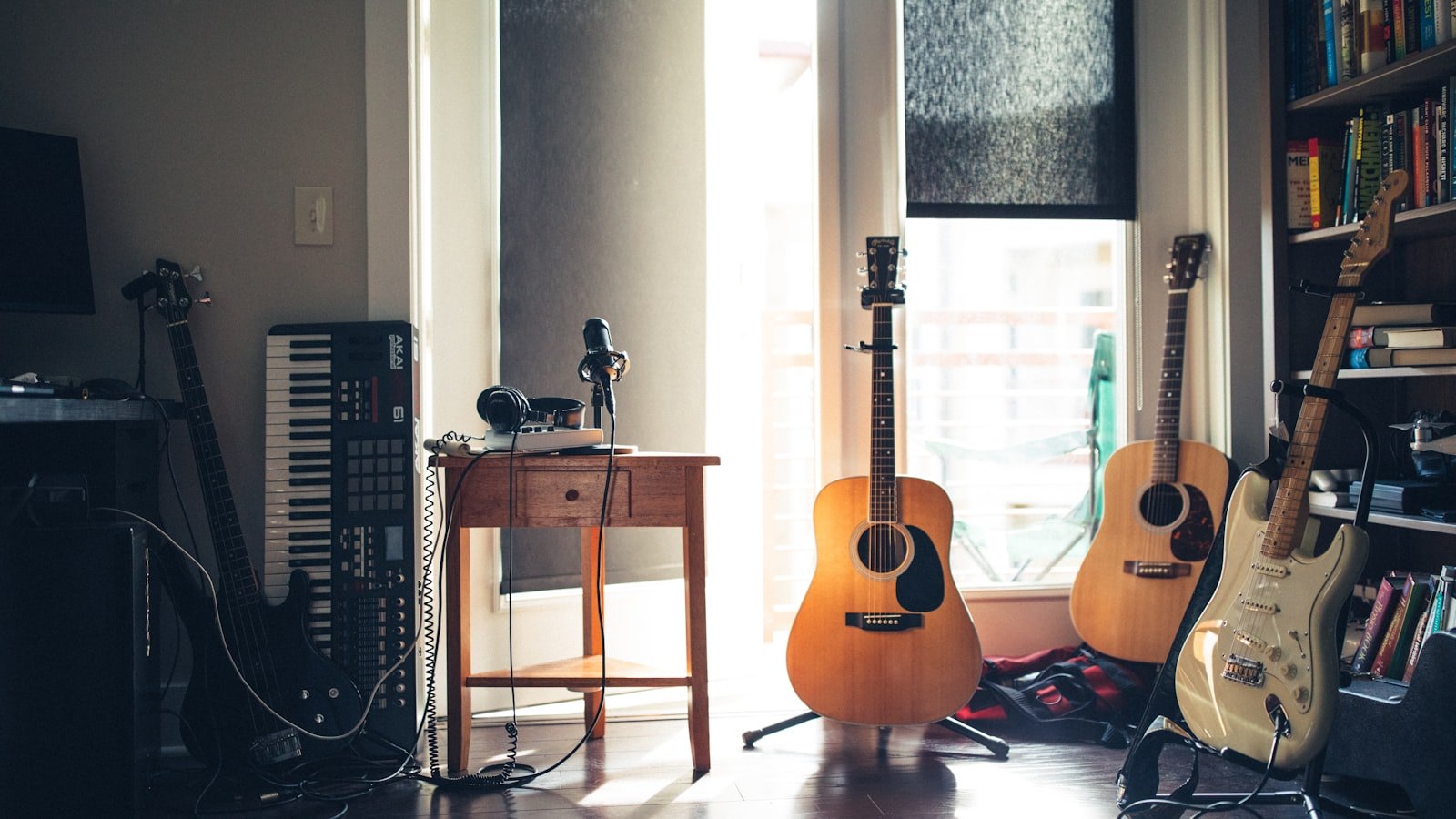
The 80-year-old electronic visionary performs her first show in Scotland this weekend before a festival set in Roswell, New Mexico next month.
- Pete Davidson Slams Online Criticism of Ex-Fiancée Ariana Grande’s Appearance: ‘I Think It’s F–ked Up’.
- Here’s How 50 Cent Reacted to Diddy Reportedly Being Sent Back to Solitary Confinement.
- Without BTS, Who Could Get An Asian Pop Grammy Nomination.
- Take a Bow: Taylor Swift’s ‘The Life Of A Showgirl’ Returns to No. 1 In Australia.
- Kid Rock Searching For Salvation on Upcoming ‘Halfway to Jesus’ Christian Rock Album Featuring Eminem Collab.
13. You’ve been doing this for a long time. What keeps it interesting to you.
You have to understand that I’ve been reborn into my imagined world. For years in the ’70s, I thought what I’m having now, this experience of a shared understanding of analog modular electronic music, I thought that was going to happen back then.
It didn’t. There are a lot of reasons for that. Some of them being the technology, the entering of large companies into the manufacturing of these instruments, the adoption by pop music of the instruments so that the keyboard was more typical than not.
So I didn’t do it for a long time. When I moved from New York City, I closed my big studio and moved to this cabin on the ocean with my piano. This was in 1992.
14. What brought you out of the cabin and back into the studio.
In my small town of Bolinas we had these community dinners, where everyone would bring something. You’d bring your own plate, your own cup, and you’d go to somebody’s house and have dinner.
A very small town. One night I’m having dinner, and I’m sitting on the floor after and I meet a young girl, and we’re talking about what we do. She says, “I play the buchla.” The likelihood of hearing this any place was like, infinitesimal.
And that was Kaitlyn Aurelia Smith. She said [let’s do an album], and we went to my studio on the water and did this improvisational recording live.
15. What are the most significant moments of your career so far.
Well, lately the significant moments have been meeting my new audience, the kids. I have this double life. I belong to a tennis club, and I play tennis with my buddies, and they come up to me sometimes and say “The strangest thing happened.
I was talking to my grandson and mentioned your name, and he went crazy.” It’s like, “Oh yeah.” I have a relationship with their children and their grandchildren that they don’t have, because they don’t know what their kids are into.
16. What is the best musical performance you’ve seen recently.
I went to a Rosalía concert, and she was adorable. After the concert, she had infinite time for her fans. She stood up in her car through the sunroof and was waving to everybody.
17. Do you pay attention to dance music? If so, what’s your take on the state of things.
I play at a lot of festivals, and they do have a lot of dance music, and I think it’s wonderful. It’s fun. It’s very loud. It’s too loud maybe, because you have to protect your ears.
Do you know Floating Points? He’s a buddy, and he has the most amazing record collection and really knows every single album that he has. I’ve been with him when he’s been DJing, and I really do get the sense of this creative force behind the music, the shaping of the arc of it, bringing it up and down.
It’s nothing that I listen to on my own, but I can appreciate it when I run into it.
18. Who’s been your greatest mentor, and what’s the best advice they gave you.
My mentor, when I met her, she was 80 years old. She was a photographer named Ilse Bing. I was in New York. I was like 25, and had nobody to share my professional life with.
I collected photography, and I met her through a photographer. She was in technology. Photography is a technological art form. She did her chemicals. She did her printing, and she taught me how to play, not to be too serious, and also to love my work.
Instead of feeling guilty about working or separating work from my life, she showed me that my work was, in fact, life. A good part of my life. She’d say, “Tell me about your work,” and nobody had ever asked me about my work.
That mattered. So she gave me a perspective on my career. Plus, she was 80. She had gone through all these stages of her career, and I’m still modeling that. Her life still has meaning to me, because now I’m 80.
20. What’s one piece of advice you’d give to your younger self.
I guess it’s just to take a deep breath and go outside and look at a tree.
Get weekly rundowns straight to your inbox.
Your email address will not be published. Required fields are marked *.
Want to know what everyone in the music business is talking about.
Visit Billboard Pro for music business news Trending The Daily A daily briefing on what matters in the music industry.
Comentários
Participe da conversa. Comentários passam por moderação antes de aparecer.
Carregando comentários…